
Establishing a foundation for digital accessibility at Cencora

The context
A strategic commitment to accessibility, growth, and accountability
Cencora, a leading provider of pharmaceutical solutions, aimed to expand opportunities for individuals with diverse abilities and positively impact communities through transparency and accountability. They began discussing ways to enhance accessibility for Cencora employees, partners, customers, and their patients. Their goal was to expandgrow their customer base, boost brand reputation, and prevent costly lawsuits by not meeting accessibility guidelines.
My role
In mid-2024, I joined a four-member multidisciplinary team to develop strategies and tools for integrating digital accessibility into Cencora's daily operations. We worked closely with leadership, engineering, compliance, and internal communications to promote this important shift toward accessibility. My role involved designing and creating training materials and educational resources for employees on digital accessibility.
The Challenge
Although Cencora had started talks on digital accessibility, it lacked a formal strategy or infrastructure. Leadership tasked our team with creating scalable and practical initiatives to integrate accessibility into the company’s global digital space for employees, partners, customers, and patients.
The challenge went beyond technical implementation; it was fundamentally cultural. Accessibility needs to transform from merely a checklist requirement into a core company value. We also encountered limitations related to time, budget, and the different levels of digital maturity among teams. Our effort had to inspire action, provide education, and develop practical tools—without overloading or alienating stakeholders.
Additionally, since Cencora operates globally, the solution had to comply with U.S. standards, such as WCAG 2.1 AA, and European Union standards, EN 301 549, while also considering regional differences. It was crucial to create a system that supports long-term scalability and accessibility for all roles, from developers to non-technical staff.
The Process
Strategy & Research
A multidisciplinary team with expertise in digital accessibility collaborated with stakeholders to set accessibility goals, identify gaps, and review digital assets. Because of the small team size, I managed the development and creation of educational and training materials, using sources like W3C, WebAIM, and Deque to broaden our knowledge base. Meanwhile, other members focused on testing and monitoring programs.
Establishing foundations for training
We recognized the need to create practical training and a framework for beginners that emphasizes core elements of digital accessibility, such as alt text, keyboard navigation, and color contrast. The goal is to highlight key aspects of digital accessibility that can easily be integrated into everyone's daily work.
Centralized Education & Resources
To centralize our efforts, we aimed to develop an internal portal offering on-demand guidance, downloadable toolkits, and training opportunities related to digital accessibility. Additionally, this platform would serve as a direct channel for requests for accessibility audits and general assistance.
Building a team of advocates
A key objective from our strategy and research was to build a team dedicated to laying the groundwork for digital accessibility at Cencora. We also recognized the importance of recruiting and training staff to become digital accessibility advocates within their teams, improving their knowledge and supporting their professional development.
The Solutions
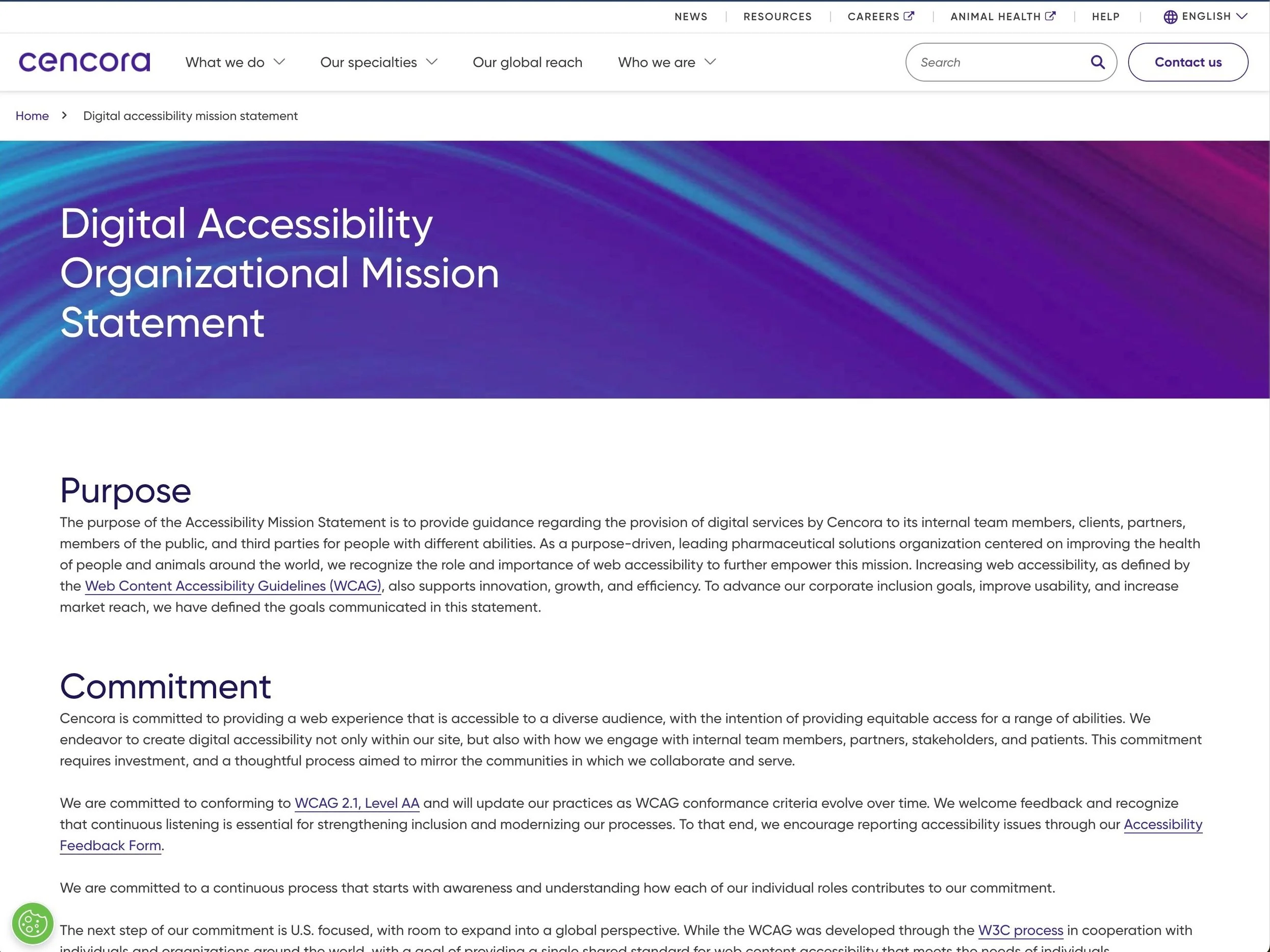
Cencora’s Accessibility Mission Statement
Leadership and our team created Cencora's Accessibility Mission Statement, reflecting our commitment to providing digital services accessible to our team, clients, partners, and individuals with different abilities. The goal is to improve our digital experiences by following WCAG 2.1, Level AA standards, and we will update our practices as these standards evolve.
Creation of the “Accessibility Foundations”
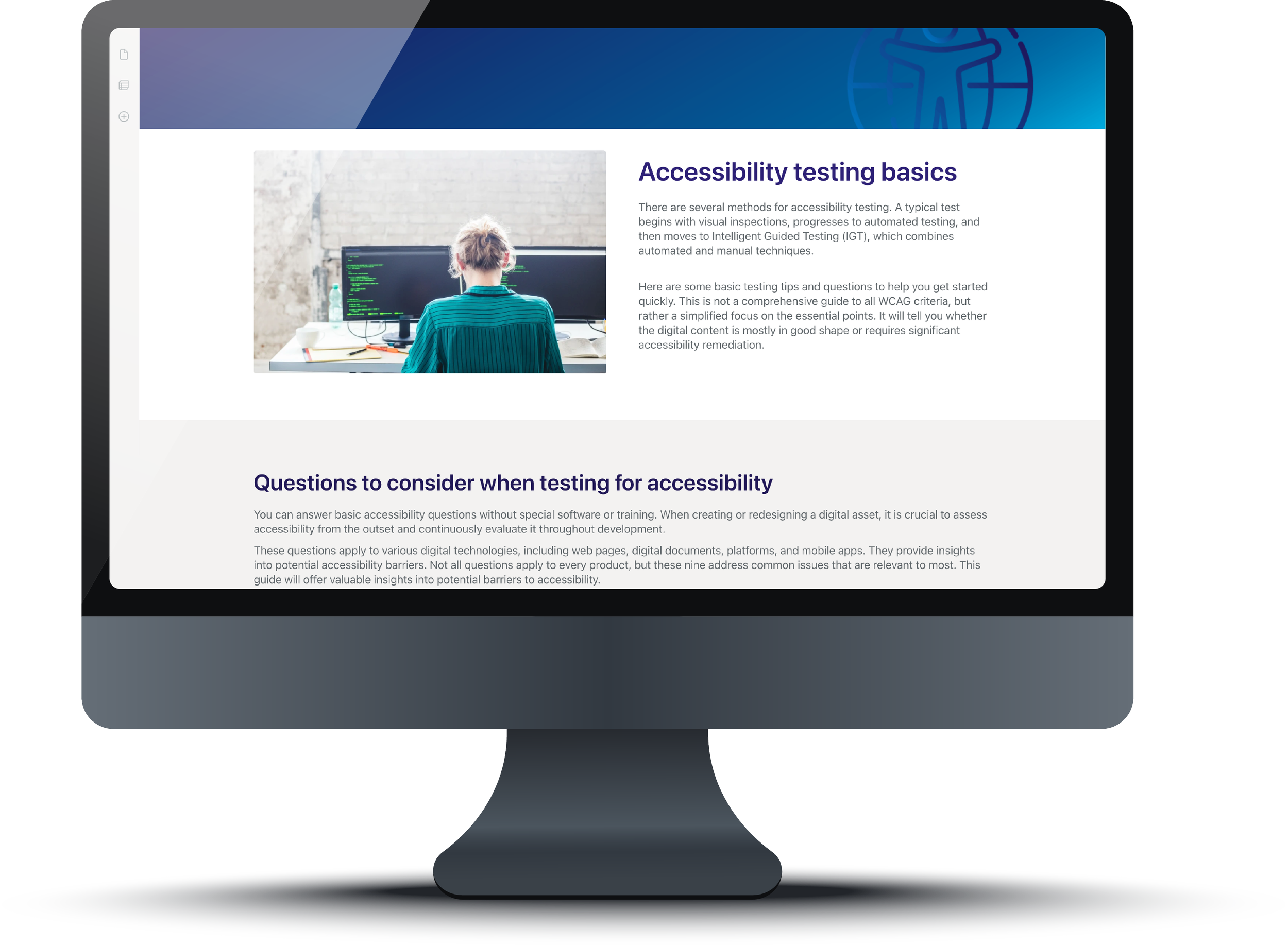
I led the development of “Accessibility Foundations”—a clear, action-oriented framework that outlines the essential components for maintaining digital accessibility (such as alt text, keyboard navigation, and color contrast) in a way that is approachable for beginners.
Each principle is grounded in real-world scenarios and emphasizes practical impact. The goal of this framework is to provide an overview that may not cover all the requirements for complete digital accessibility, but highlights the key elements that can enhance the accessibility of Cencora's digital assets.
Launch of the Accessibility Hub
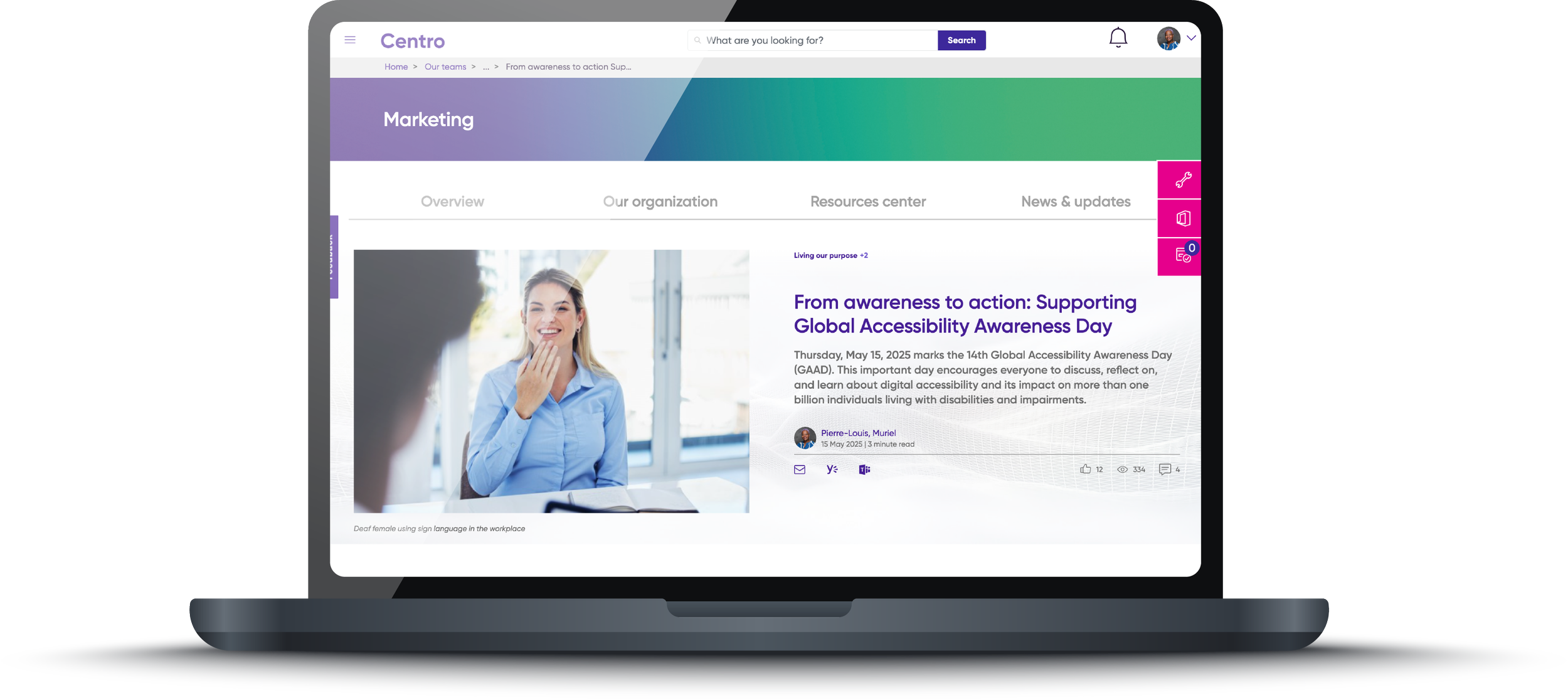
To achieve the goal of a centralized platform available to all employees, I designed, developed, and launched the “Accessibility Hub” on Microsoft SharePoint. This internal portal provided on-demand guidance, downloadable toolkits, training opportunities, and a direct line for accessibility audits and support requests.
We promoted the Hub and encouraged all team members to explore the site as we enhanced our accessibility practices, and we launched the Hub with email blasts and an article on Cencora’s intranet.
Building the digital accessibility training
I was responsible for designing the curriculum, which includes modules on core accessibility principles applicable to all individuals involved with Cencora's digital platforms. I utilized the WCAG framework to develop the accessibility training and curate content for the curriculum.
The training focuses on the basics and skills needed for testing, developing, designing, and creating accessible digital content. I collaborated with our internal learning development team to upload the materials into the learning management system Articulate 360. I created a multi-session structure that includes a virtual kickoff and practical workshops, combining fundamental concepts with project-specific advice.
The curriculum outline:
Understanding digital accessibility
How digital accessibility improves overall user experience
How people with disabilities navigate digital technology
What are the principles, standards, and checks for accessibility
Taking the first steps toward incorporating digital accessibility
Takeaways and next steps
Launch of the Accessibility Champions Program
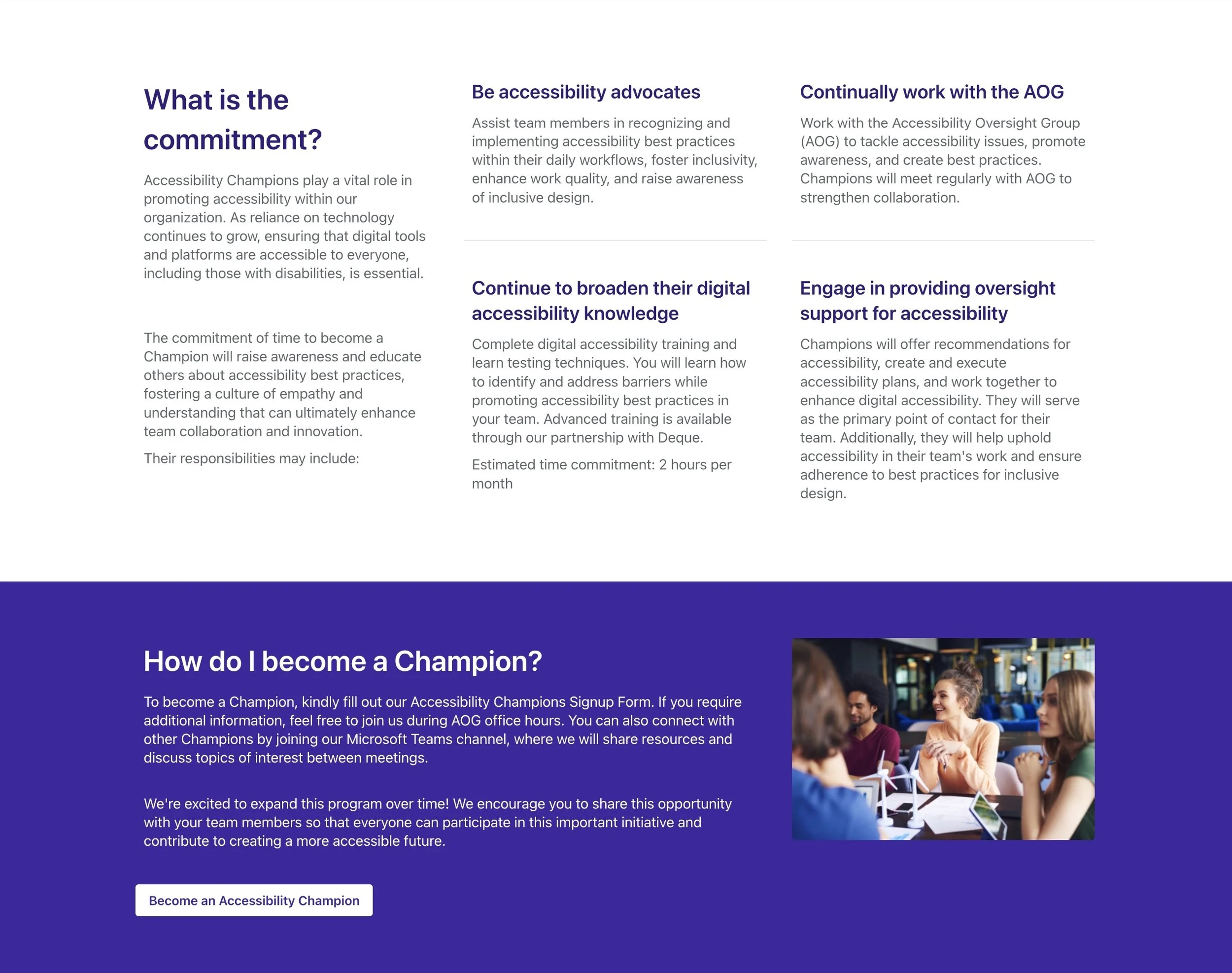
To improve accessibility advocacy, the team launched the Accessibility Champions program. This allows employees to volunteer as local accessibility advocates within their teams, increasing their knowledge and developing new skills. Team members can consult Champions on accessibility issues at every project stage, helping to incorporate accessibility into websites, applications, and digital content. This approach ensures accessibility stays a priority rather than being overlooked.
The Impact
Continued commitment to creating a digitally accessible culture at Cencora
Although our team's work is still relatively new, we have already observed its positive impact and benefits in promoting digital accessibility:
Over 100 team members engaged with the Accessibility Hub within the first month of launch.
30+ Accessibility Champions trained, representing teams across product, design, development, and operations.
Accessibility has become a regular part of product planning discussions, driven by AOG influence.
Implementation and training of an accessibility annotation kit for designers to use during development handoff.Digital Accessibility training is now available to all employees
Reflection
This project really opened my eyes to how we can design not just digital assets but also facilitate cultural transformation. A key lesson I learned was the importance of balancing big ambitions with practical, achievable steps—beginning with small, manageable changes and gradually scaling up in a thoughtful way.
I am constantly refining my instructional design skills, focusing on breaking down complex concepts into clear, engaging parts that genuinely connect with and motivate learners.